
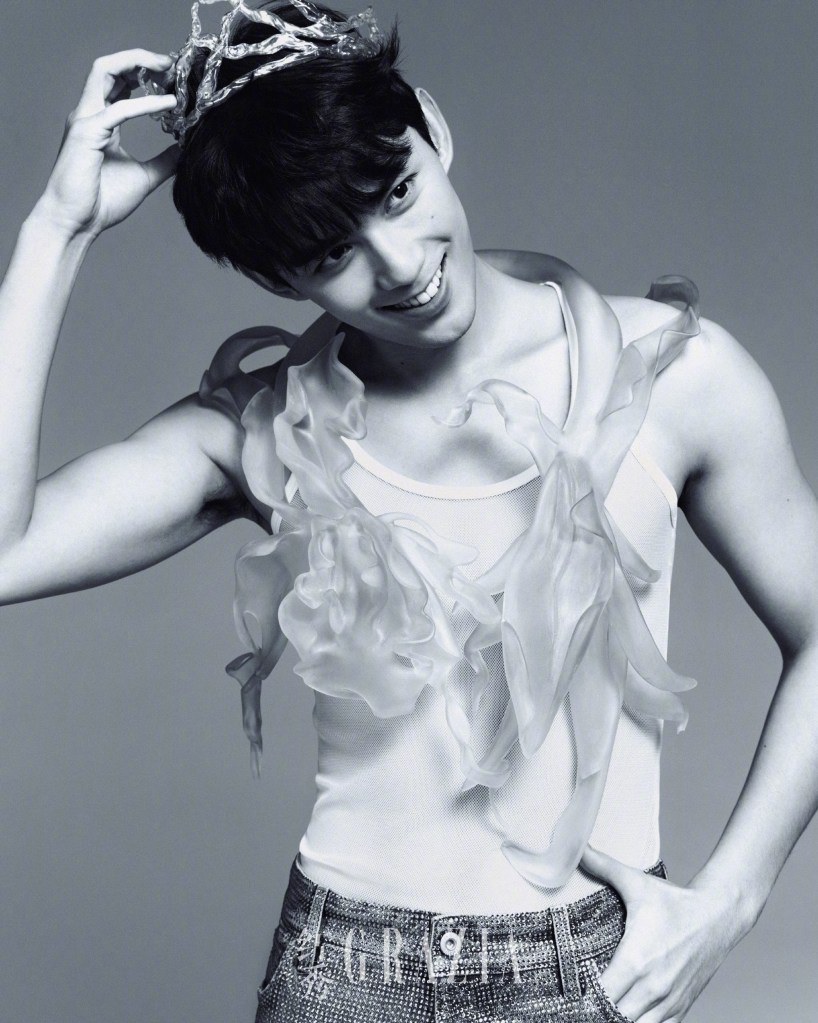
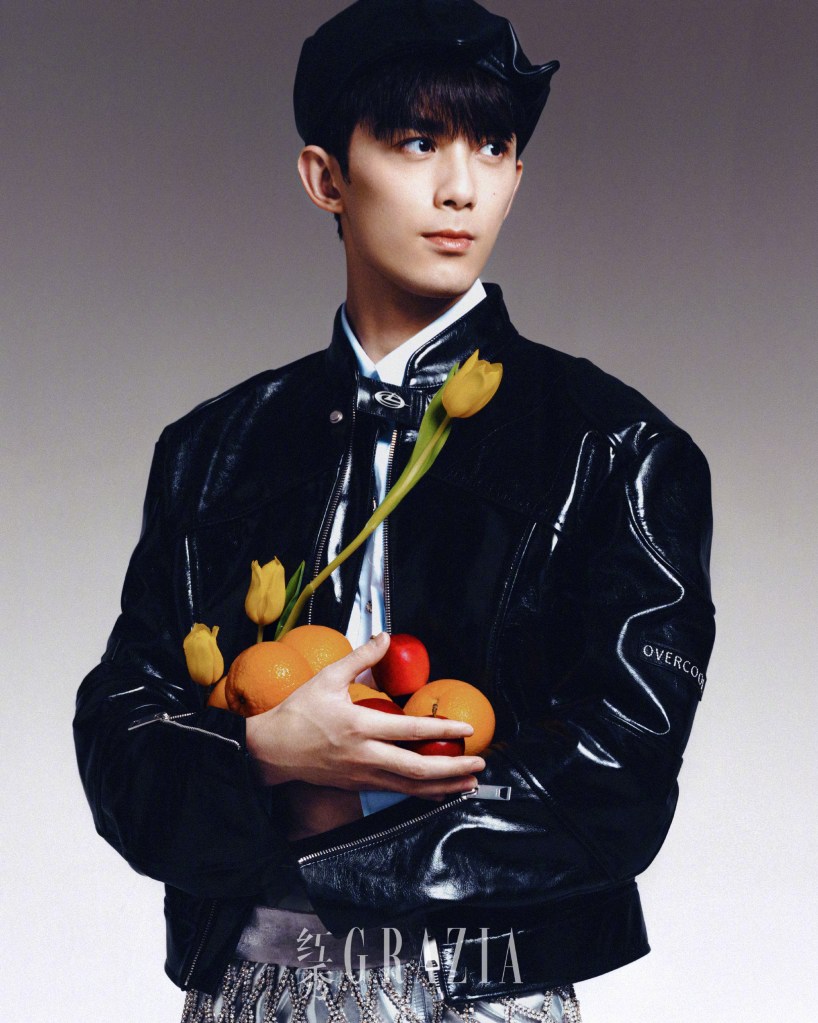
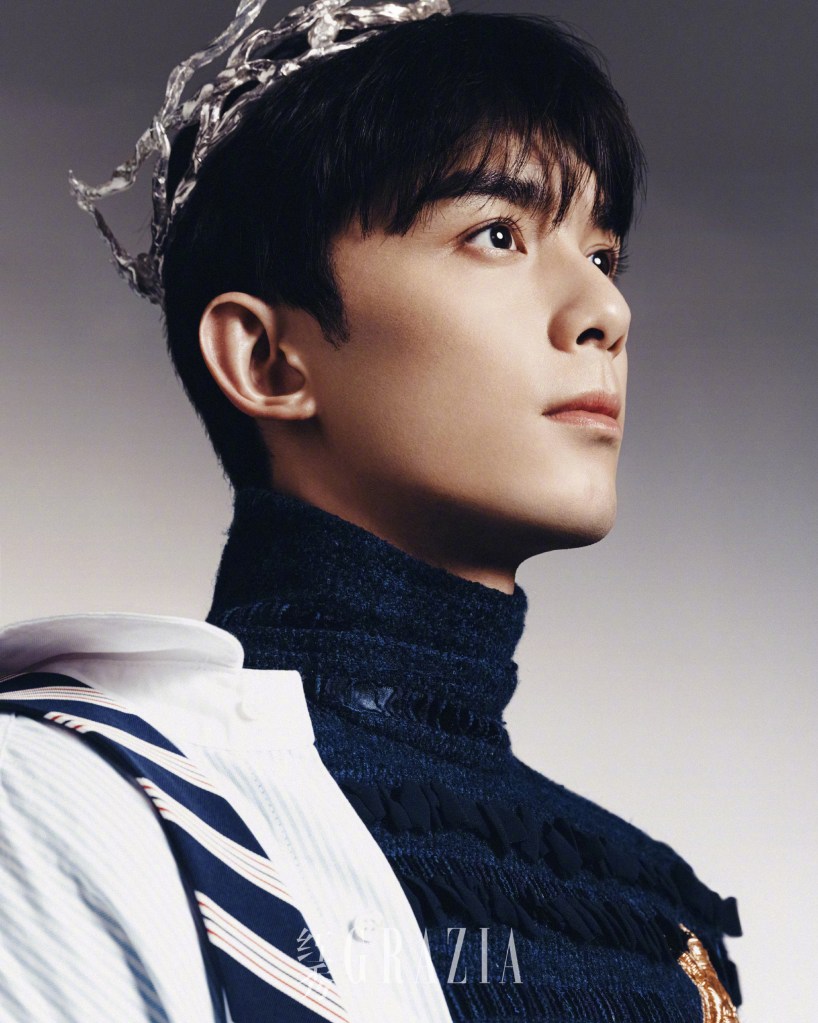
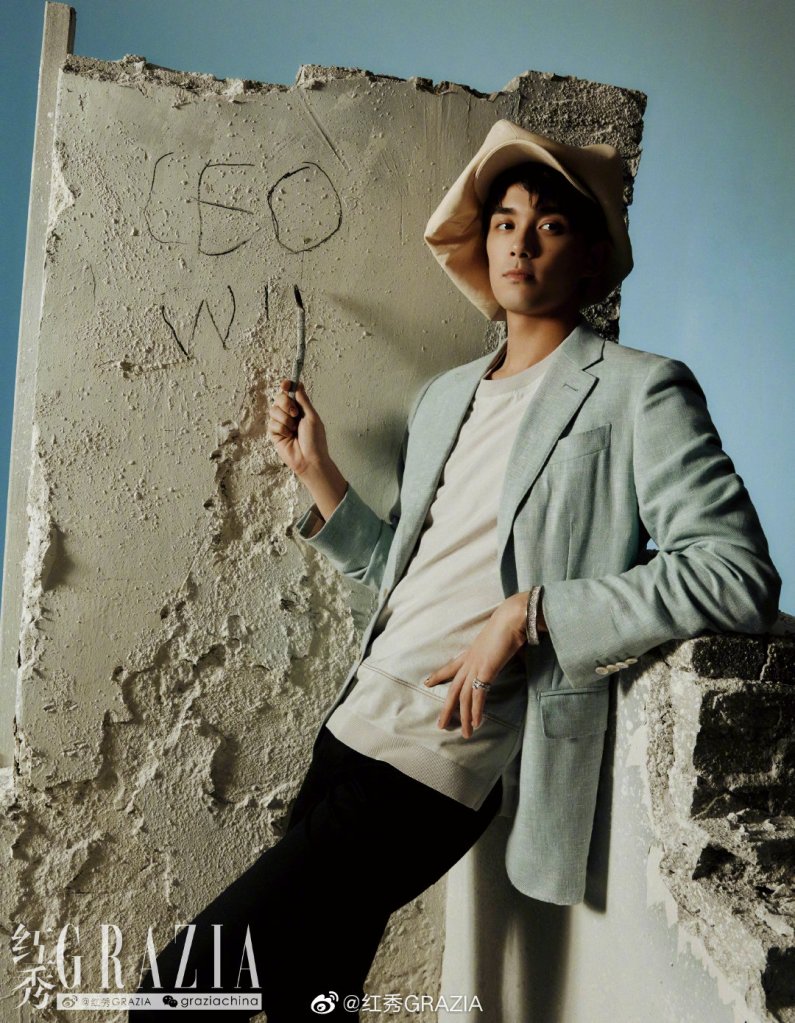
WULEI
Breaking Wind
*Breaking Wind is a term used in cycling to describe a rider who is able to break away from the main group and ride alone at a faster speed
Translation credit to @5051sm
In the past few years of falling in love with cycling, Wu Lei often finds himself in moments where he needs to “compete” with the wind.
In professional road cycling, this is called “breaking wind.” The whistling sound passing by the ears is not a clear proof of speed but also the greatest resistance to go forward. Therefore, all tactics at this moment revolve around the wind. The unseen wind becomes a perceived opponent. Wu Lei understands that he needs to surpass not only the wind but also his own self from the previous second.
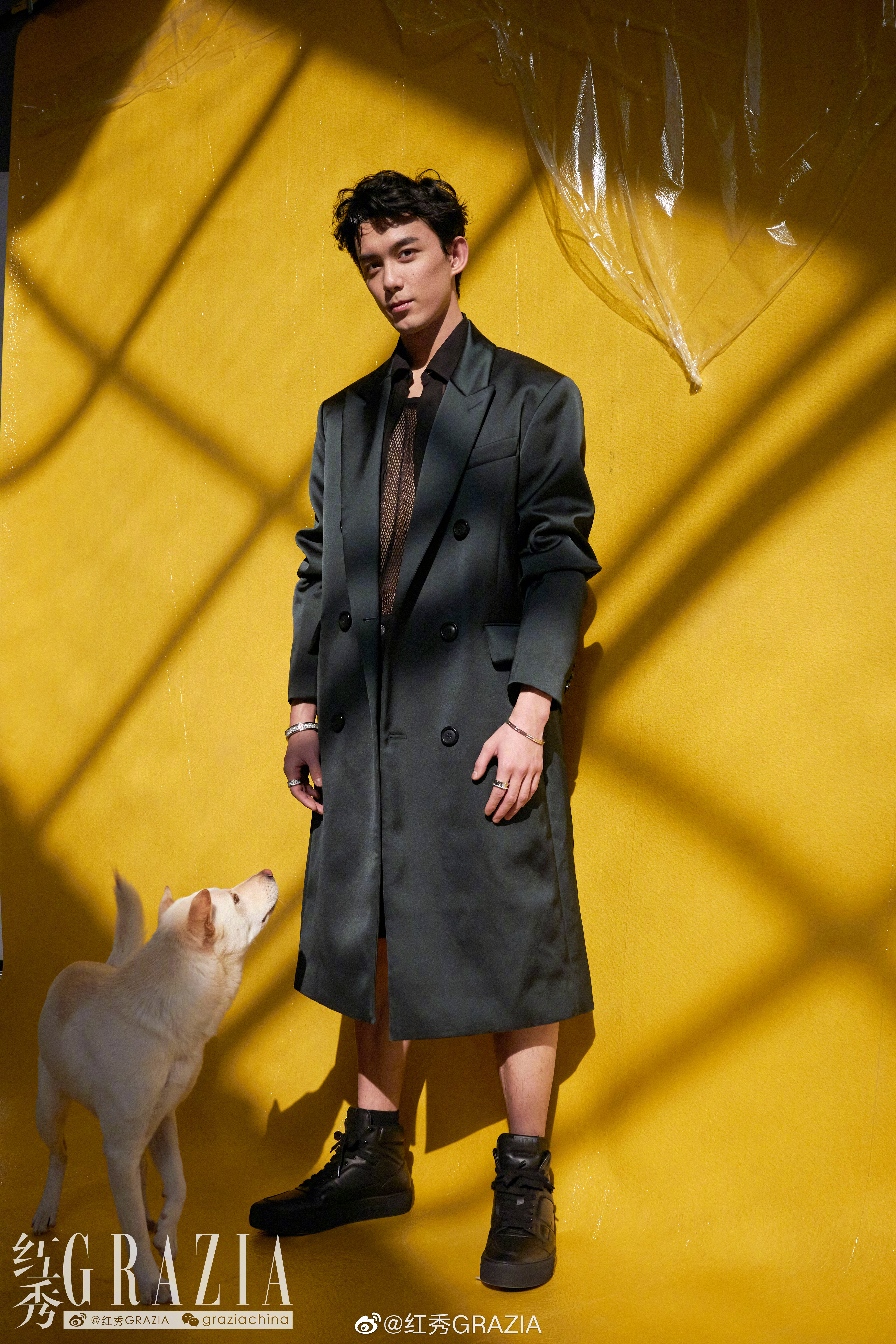
The moment writing this, Beijing has just experienced its first heavy snowfall of the winter. In the photo of Wu Lei playing in the snow that he posted on Weibo, he is joyfully playing in the snow with his beloved dog Xiao Bei, diving headfirst into the thick snowdrift. A clean face without any makeup, slightly reddened by the cold wind. Covered with snow, combined with the untrimmed blue-green stubble on his chin, his big smile at this moment strikes directly at the heart.
These moments brimming with the freshness of life often appear on Wu Lei’s social media platforms. They are mostly candid shots that don’t overly focus on composition: such as the disheveled encounter with heavy rain after watching a movie late at night, or a stroll through a hutong one evening. Wu Lei doesn’t shy away from these less “refined” and even somewhat rough moments. While recording a cycling vlog in Xinjiang, despite having four pimples on his cheek due to staying up late, he boldly faces the camera and starts recording the video.
In the first half of this year, on the second day after the completion of the filming of the new drama “Amidst A Snowstorm of Love” Wu Lei embarked on a cycling journey in Northern Xinjiang. This also marks the second season of his personal cycling video series “Ride Now.” Despite more than half a year passing, Wu Lei still holds vivid memories of Northern Xinjiang. Mentioning the first day of the journey, the circumnavigation of Sailimu Lake, he felt it was an experience that he would “never forget in this lifetime.”
Sailimu Lake, situated at an altitude of over 2000 meters, has a cycling loop of 90 kilometers and Wu Lei took two days to complete it. On the first day of circumnavigating the lake, he coincidentally encountered rare May weather at Sailimu Lake, characterized by wind, rain and hail. Wu Lei described riding in the rain as an “exhausting but exciting” experience: his body felt the cold from the rain and the soreness after exhaustion, yet internally he had already scripted a passionate and dramatic narrative, urging him to persist and complete this solo lake circumnavigation.
Most of the time, cycling is a solitary activity, without interactive companions or competitors; the only challenge is the vast mountains and seas ahead. In Northern Xinjiang, Wu Lei found numerous moments that were exclusively his own. He talked about camping by Sailimu Lake, spending the night in an “isolated from the world” manner: “It feels like being in a corner of the Earth in the universe, a corner that belongs only to me and everything outside has nothing to do with me.”
Even six months later today, Wu Lei has not obtained an answer regarding the meaning of this journey. However at this moment, he no longer needs an answer: “I feel that many times we are trying to attribute meaning to something, as if always giving ourselves a psychological suggestion, as if to prove, ‘I’ve come, my journey must be fruitful.’ Upon careful consideration, it’s actually quite unnecessary. You can just enjoy the process without any purpose or summarization, without dividing your life into segments. In Wu Lei’s view, when it comes to cycling, it’s best to “not think about anything” clear the mind and focus solely on the act of “riding”. Just enjoy being in it.
What also engrosses him is acting. The new movie “All Ears” is scheduled to be released in September this year. Wu Lei plays a character named Xiaoyin, who is somewhat special: not only is he a character created by the male lead, Wenshan (played by Hu Ge) but he is also a reflection of Wenshan and even another personality of Wenshan, representing his inner self. Wu Lei believes that this character is more like “the other self that everyone talks to in their hearts.” He uses himself as a reference: when a person is in a certain state, when do they need to have a dialogue with themselves, and how to deal with the appearance of different voices in their hearts. Wu Lei often engages in this kind of “dialogue with himself.” He gradually realized that “self-reconciliation” might be a lifelong theme for humans especially for actors, pondering and understanding the “true self” is particularly important.
Only when interacting with a character does he strive to become “someone else.” In the upcoming drama “Amidst A Snowstorm of Love” Wu Lei plays Lin Yiyang, a professional snooker player. Before the start of filming, he watched documentaries about professional athletes, studying their playing habits: “Including the actions that occur after scoring or winning or losing, everything will be referenced when getting into the character. After all, I haven’t played in a competition myself.” He also played a professional tennis player in “Nothing But You”. The playing style of Song Sanchuan was largely modeled after Nadal.
At the age of 5, Wu Lei entered the entertainment industry and now approaching 24, he has nearly 19 years of acting experience. However on set, he still occasionally feels “nervous.” Last year, during the filming of “All Ears” he recalls it as a few months where he felt “like returning to being a student.” With director Cao Baoping who also served as the producer, present on set, there was always something new to learn every day. He had to summon the determination for a major exam, maintaining a high level of focus at all times.
The two upcoming films, along with director Xu Haofeng’s new-style martial arts film “Decent Things” and the already premiered “Dwelling By The West Lake” provide a diverse range of roles for Wu Lei. “Dwelling By The West Lake” draws inspiration from the legend of “Mulian saves his mother” portraying a modern version of the story where the son, Mulian, tries to rescue his mother, Taihua, from a fraudulent organization, only to find themselves both in more desperate circumstances. Wu Lei described the creative process of this film as a “quite painful” experience, not due to the lack of joy in the creation itself but because the demands of the characters and the story took a toll on both his mind and body.
Wu Lei has previously watched director Gu Xiaogang’s work, particularly “Dwelling In the Fuchun Mountains” which won Best Feature Film and Best Director at the 13th FIRST Youth Film Festival. This movie tells the daily life of three generations living by the Fuchun River in Hangzhou and is predominantly performed by non-professional actors. Wu Lei expressed that after watching this film, he was “shocked.” The extreme authenticity from non-professional actors even led him to question his own performance: “Such performances are truly touching.”
Wu Lei took a considerable amount of time to contemplate before deciding to take on the script of “草木人间” (“Dwelling By The West Lake”). With the seriousness characteristic of a Capricorn, he operates in only two states: “not doing” or “doing it the best.” There is no middle ground of indecision. According to director Gu Xiaogang, before the movie started filming, Wu Lei had already immersed himself in the character’s state: he cultivated plants, started paying attention to time and nature. By the time the plants he nurtured blossomed, meeting Wu Lei on set at the beginning of filming was akin to encountering the character of Mulian in the story.
On the other hand, shooting “入型入格” (Decent Things) provided a different, exhilarating experience.
Director Xu Haofeng’s works always exhibit a distinctive “Xu style aesthetics.” The intense fight scenes, rich in rustic martial arts flavor, exude a straightforward and unadorned Jianghu atmosphere. The title “人型人格” (Decent Things) refers to the Cantonese phrase for “doing things beautifully.” Actor Chen Kun, reflecting on the numerous action scenes, expressed that they filmed fight scenes continuously for over twenty days. Wu Lei found the experience quite “extraordinary,” saying, “The first feeling is that it’s very cool, as if I’ve truly become that ‘Southern hermit’ seeking justice. Every day, I’m doing cool things, constantly ‘being formatted.'”
The presence of distinct differences between characters is not a deliberate pursuit or effort on Wu Lei’s part. He doesn’t resist the appearance of similar roles and acknowledges that delivering a different interpretation within the same type of character requires significant effort.
Wu Lei doesn’t believe there is an absolute “comfort zone” in acting. He views characters as living individuals and acknowledges that no role is entirely “comfortable” because he and the character are distinct entities. While he may feel the excitement of a fresh challenge, he doesn’t pursue it as the sole purpose of his endeavors.
Wu Lei continues to face challenges in determining the types of roles and projects he should pursue. However, he has shifted his perspective, realizing that blindly challenging himself might not be a cause for celebration. He now believes that actors should focus on getting closer to the characters rather than insisting on specific roles or scripts. He acknowledges that encountering roles is often a matter of fate, and he embraces the exploration and possibilities within his passionate profession. With a readiness to explore, this 24 year old actor is prepared to break through barriers and move forward.
Feel Wu Lei’s ‘down-to-earth flight.’
Grazia as ‘G’
WuLei as ‘W’
G: After returning from Xinjiang, have you gone cycling again? Where did you ride to?
W: Yes, I’ve cycled in Beijing occasionally after work. There’s no specific destination, most of the time, I just ride for as long as I feel like it. I might have an initial expectation in mind, but it often changes during the ride.
G: What’s the longest ride you’ve had, and how many kilometers did you cover?
W: Probably around 100 km. If I feel good and not tired, I might extend the ride, but if I’m tired, I’ll head back.
G: Among all your cycling experiences, which one is the most memorable, an experience you’ll never forget?
W: It should be the first time I hit the road with a mountain bike. It was the first experience of that speed and the feeling of flying close to the ground. I was amazed at how enjoyable and stress-relieving cycling could be.
G: Filming in Finland, what’s the most memorable experience for you?
W: After filming, I saw the beautiful Northern Lights. Also, there were some small moments during the shoot. The local co-production team was very professional and many scenes, like taking the tram and other public transportation, were filmed without disrupting the local public services. It made me feel like I easily blended into the local life. Even though I didn’t actually live there, during those several tens of days, it felt like I experienced the life of the locals.
G: “All Ears” discusses a lot about the theme of “reconciling with oneself.” Have you had such an experience yourself?
W: I think I often have internal dialogues with myself. Occasionally, I figure out many things, and then there’s a resolution. Actually, I think it’s quite important; many things are just a result of trapping oneself.
G: “Dwelling By The West Lake” went to the Tokyo International Film Festival. How did you feel receiving feedback from the audience?
W: I felt very good and beautiful, but in reality, a bit nervous because you never know if the audience will like it or not. However after the premiere, the audience’s feedback was quite positive and it felt satisfying. When dubbing, I actually watched the completed film once. This time, during the premiere, we watched it again on the big screen with the audience and it brought a different feeling.
G: Share a recent moment that you found particularly beautiful.
W: Just this morning, when I was on my way to work, there happened to be a traffic light and at that moment, the clouds in the sky looked beautiful. Some clouds were high, some were low and behind the low clouds, there were many high clouds. They stacked together, creating a beautiful scene.









 Wu Lei Galaxy