
Wu Lei: Keep flying
Wu Lei has always liked the term “Ground-based Flight”. He used this word to describe an ideal state of life in his mind, “moving forward at a constant speed on his own life path”, like walking against the wind. He seems to follow his heart, no matter where the goal is, the direction is firmly in his hands, and the traces left when flying gradually lay the foundation for the meaning of his life.


At the age of 20, Wu Lei published his first book, “Ground-Based Flight”. He wants to keep the past time and the once-in-a-lifetime 20-year-old as a souvenir. He defines this book as “a landing in flight” – leaving a temporary stop in the constantly superimposed life experiences, review the past transit points, pack your luggage and storage before setting sail again. In the concluding chapter of the book, he describes the process of landing and taking off countless times in his life as “ground-based flight”. “Flying is to keep moving forward on the chosen path; and constantly touching the ground is to accumulate stronger take-off boost.”
This sentence he wrote when he was twenty years old became the yardstick in his heart. So, the cycle started over and over again. Even though the flight was bumpy most of the time, he always crossed the sea of clouds and flying slowly on that flight path.

01. Learning is Learning
Recently, in order to promote the Beijing Winter Olympics, Wu Lei went to the original “Water Cube” venue to experience curling – during the conversation, he seriously corrected me, “Now it has been renamed the ‘Ice Cube’ – in In the arena where fierce competitions will soon be presented one after another, for the first time in his life, he tried this sport that he could only see on TV in the past. “I used to think that only national athletes could enter it (the Water Cube). This rare experience made me feel so sacred. After actually experiencing curling, I was much more tired than I imagined.”
Regarding curling, Wu Lei seems to have done a lot of homework. When talking about his first experience, he can speak clearly, “Isn’t curling always called ‘ice chess’?” He introduced seriously, “IIt relies on strength and strategy, but also requires an understanding of psychological games. In addition to superb and precise skills, it also requires the execution strategies that the team members should have, including offense and defense. It is a multi-faceted sport. I think it’s fun.” At the end, he added with a smile , “I’m not advertising. I heard that the Ice Cube will be open to the public in the future. Everyone can go. If you are interested, remember to experience it.”

Because he is young and enthusiastic, he has an irresistible enthusiasm for all new things. The passion and happiness brought by the game made him immersed in it. If you mention “game”, it is actually more likely to remind people of another sport that most often appears with him – horse riding. Not long ago, some netizens carefully edited the scenes of him riding horses in and out of the drama into videos, including Ashile Sun in bright clothes and fierce horse in “The Long Ballad”, and the dashing and heroic figure in “My Country, My Parents”. He is both riding horses and riding the wind. The young man on the horse always has a very solemn attitude. He holds the reins tightly with a solemn expression and concentrates on it, he’s not only being intimate with the horse under his lap but also playing games with each other.
The first time Wu Lei remembers riding a horse was when he was five years old when he was filming the costume drama “Northern Wei Legend” and played the role of Prince Tuoba Xun. At that time, the little boy, who was only about knee-high and the size of a pea, was so frightened that he cried loudly as soon as he was put on the horse. He had to be coaxed and half deceived before he was willing to be put on the horse. In his young eyes at that time, the back of a horse was as inaccessible as a cliff.
Later, he made a living by acting, and there were many scenes of riding horses. Wu Lei always liked to do scene of going into battle himself. As time went by, he got to the point where it can really be called “horseback riding”. It was accompanied by countless experiences. Later, The experience he gained: firstly, practice makes perfect, and secondly, overcoming psychological barriers. “It’s quite strange to think about it now. It seems that I learned it all of a sudden.”
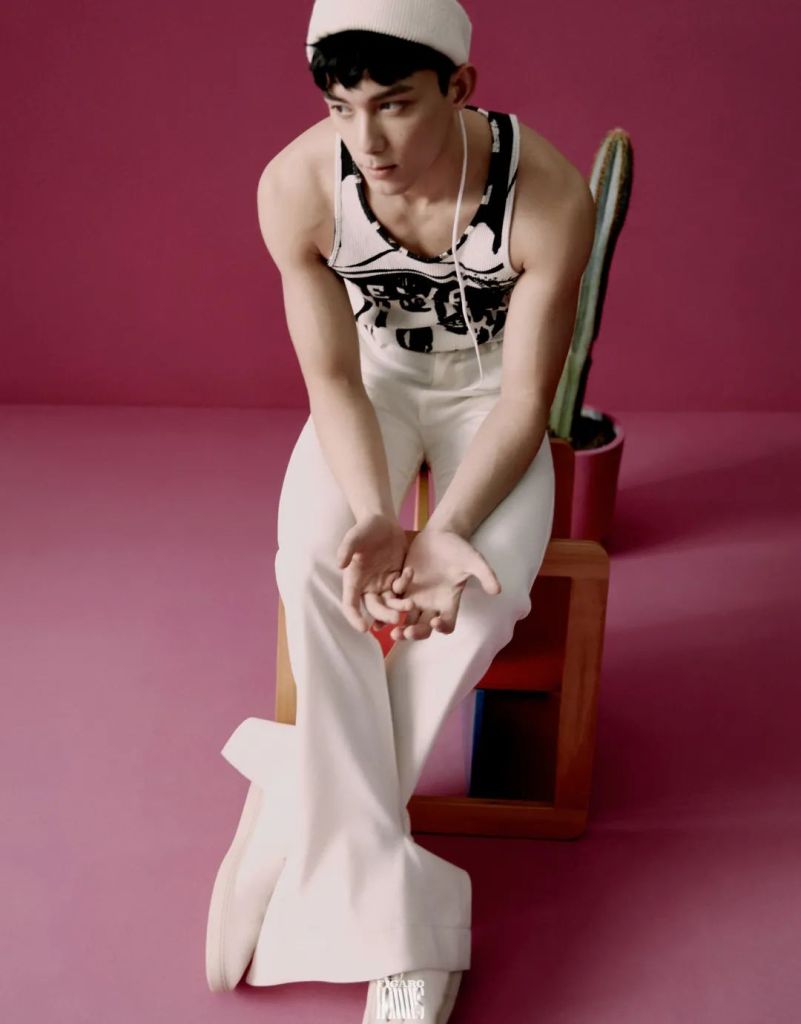

There was a year when Wu Lei took on a costume drama, and the role had a lot of horse riding scenes. He was a serious person, and he felt that an actor’s duty is to be able to achieve the best possible score in the parts he can work hard on. So he went to a certain racecourse in Beijing to practice horse racing. he went back and forth five or six times. He spent a lot of money, but it seemed that he didn’t learn anything. He just touched a vague threshold, but at least he learned the basic skills. He had a general feeling in his heart, but to be able to turn the feeling from blurry to clear, he still have to rely on “driving the ducks to the shelf*” during filming. “Later on, I learned how to ride a horse on the set, because during a scene you had to get on the horse and run away. So I had no choice but to improvise, listened to the instructor’s instructions, and bravely went into battle. The result was that I had not learned how to ride a horse and walk with it, but I had learned how to ride a horse and run first.”
(note: * 赶鸭子上架 (riving the ducks to the shelf) is a metaphor meaning forcing someone to do something beyond their ability)
When we asked him to summarize his horse riding experience, in addition to the cute answer of “ride more and you’ll be done”, Wu Lei feels that horse riding is like a “game”. “To me, it is just like riding a bicycle, it is a skill and a hobby. Riding horses requires dealing with different horses, and different horses have different ways, just like the communication mode between people.”

“You can’t underestimate any horse. Every horse has its own character and soul. If you want to ride it, you must not only have very good riding skills, but also have to be in awe of it. You respect it and it respects you.”
When filming, if there is a horse riding scene in the play, the crew will usually prepare two horses to match different shots. This means that Wu Lei will have close contact with at least two horses in one play. When asked if he would get close to the horse before filming so that he could ride more smoothly, he deliberately said seriously: “We usually contact each other on WeChat first.” Before I could react, he said with a smile: “In fact, I usually go to the scene and ride directly. Of course, the deeper the relationship (with the horse), the better, but it is not a hard requirement.”
Having said that, Wu Lei also has his own “horse-inducing skills”. “I will still talk to the horse seriously,” he said with a smile, “I will touch it and pat it. I hope we can cooperate well in the future.” However, rather than trying his best to please his partner, he prefers to rely on his strength to speak for himself. “The most important thing is to weigh each other. Horses are very sensitive animals. As soon as you ride on them, it only takes ten or fifteen seconds. It can immediately sense whether you can ride a horse or not, and so can the rider. It doesn’t take long after you get up there to figure out what kind of character the horse is. This is a very rapid process of communication and adaptation.” This is also a rapid game process – a contest between spiritual creatures and humans. It is also a secret psychological war.
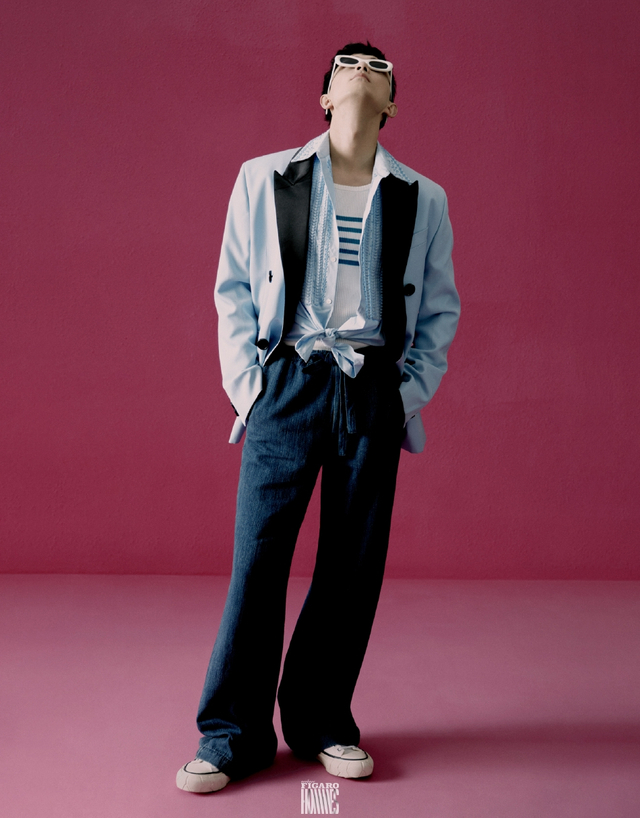
In his impression, most horses were willing to get close to him in the end, but there were some horses that gave him a headache, so that became the most profound experience in his memory. When filming “My Country, My Parents”, Wu Lei played Ma Chengfeng, a member of the cavalry regiment. Ma Chengfeng has a close and special comrade-in-arms, the big black horse he rides. For filming needs, the big black horse also had a “horse stand-in” at that time, which was specifically used to capture and shoot some difficult actions, such as the posture when rising. Wu Lei clearly remembered its name, which was Lei Ming.
In his description, Lei Ming is like a horse that has not yet been completely tamed, impetuous and fierce, with a wild temper, “with a bloody spirit”, and also like a hot-blooded young man who refuses to admit defeat and loves to compete. Every time he rides it, Wu Lei always realizes that it refuses to admit defeat and is not adaptable, does not listen to advice, is resistant, and loves to compete with him, but this is a game in which each other does not give in. You have to constantly compete with it, and the more it goes off-road, the more it will arouse the unwillingness and wildness in your body. The more it wants to fight you and steal the reins from your hands, the more you have to use skillful efforts to control it and subdue it. “
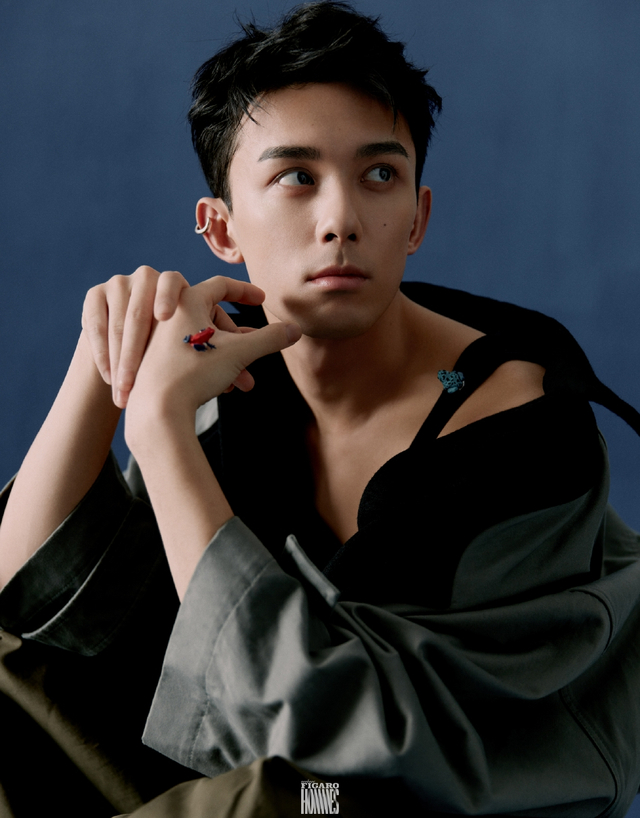
When riding a horse, you have to compete with the horse. But most of the time, the person Wu Lei competes with is himself. It is his daily homework to prepare and learn the skills that the characters in the film may use. Zheng Yuxing in “Upcoming Summer” likes electronic music and dreams of becoming a DJ one day. In order to be able to play the role well, Wu Lei started DJ training after receiving the script.
“These are all things that should be done,” he said it casually, “It’s like a feedback process. The things I prepared in the early stage will reward me in unexpected ways during the shooting.” He described these preparations as planting seeds. He carefully buried the seeds in the soil and then allowed them to grow freely.
“Although it seems that I am just learning this skill, in the process of learning, I am slowly becoming the role itself. In the acquired experience, I will have some insights and understanding, and understand what it is like to be a professional worker with such skills. What kind of state and what kind of characteristics does it have? These associative thinking will help me understand the situation in the play, so it is a very important job.” This is like a way of character interpretation that breaks through from the outside in. He uses the skill and the state that he shares with the character to empathize, and finally opens a portal to become one with another person.


In Wu Lei’s mind, the starting point for learning a skill is not only to experience the role, but more importantly, passion – there is no more powerful source of motivation than the three words “I like it”. As all of us have experienced, the stage of learning is usually divided into three stages: the enthusiasm arising from curiosity, the boredom and dullness that may appear in unremitting efforts, and in the end, you may achieve something small. Many people tend to get stuck in a boring stage and choose to give up. This is human nature. The motivation that arises out of curiosity can easily be extinguished by a boring period that lasts too long, not to mention that the subjects to be studied are inherently not really needed, so they give up halfway. When it comes to learning, Wu Lei is much more determined. He is confident that he can successfully resist boredom and dullness every time. “If it is something I want to do, I can handle it no matter how boring it is.”
“The things I will learn and do are all things I want to do. Because I like it, even if I encounter ‘boring’, I won’t think it is boring.” He replied, “I learned many musical instruments when I was a child, including piano and violin, it was really painful to learn these things at the time, and I couldn’t stick to it. When I grow up, I have to learn a lot of things. At first, it was for the role, but later I realized that these are ‘things I have to do’, and that’s what I thought in my heart. If you think about ‘what I want to accomplish’, you will be willing to do it, so no matter how many times you do such things, it will not be boring, and even if it is boring, you will not feel it, because it is your own choice.”
So what does it mean to learn?
“Learning is learning,” he said without hesitation, “and that’s it. I never want immediate results for many things. I don’t think this is good. You can’t define anything prematurely. No matter what I do, Whether I am studying or doing something for the sake of progress, I am enjoying the current process. As for the benefits or disadvantages of the results, I have to leave it to my future self to consider.”

02. Landing and Flying
At seven o’clock in the morning on the first day of his 22nd birthday, Wu Lei opened a live broadcast on Weibo. He stood on the vast grassland of Inner Mongolia, with the gentle morning light behind him. Before this, he took netizens to watch the sunset, see the first snow, and also shared the beautiful scenery from various places, but this was one of the few planned events.
Wu Lei himself is not a person who has too many rituals about birthdays. In the days when he was slowly turning 21 to 22, he had been traveling in the grasslands of Inner Mongolia. It’s not to celebrate his birthday. He just happened to finish filming and give himself a holiday, and this trip coincided with his birthday. “I used to celebrate my birthday every year on the set, but this time I want to go to a quieter place to stay.” Precisely because it was his birthday, he knew that everyone would be very concerned about where he was, so he had this live broadcast. “Originally I just wanted to live quietly by myself, but then I felt that it was a bit selfish to think this way. In the end, I wanted to share the first day and the first sunrise of my twenty-two years with everyone.”
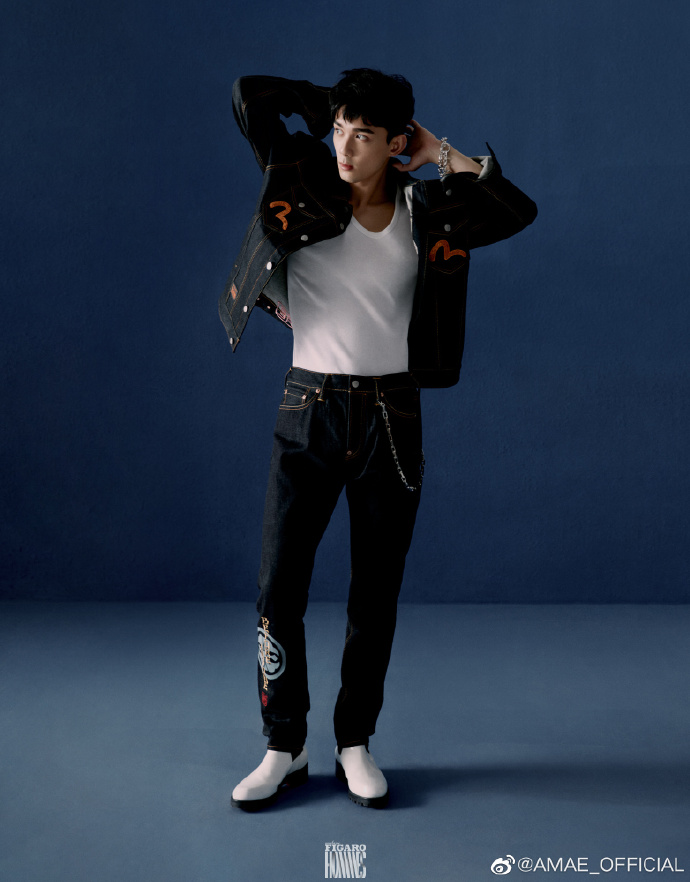
However, he has a “sense of ritual” in another sense. He started filming at the age of five. In his 22 years of growing up, most of his life was devoted to work, which made him develop the habit of “keeping things in order” – this is what he calls ” “Everything you have to do in a day will be carefully arranged. Work, read books, play games, and keep everything organized. You know, just like a child.”
“I think this is also a sense of ritual that can make me more focused, just like what we always call immersive work, immersive riding, and immersive gaming. On the one hand, it is learning, and on the other hand, it allows me to get satisfaction.”
Wu Lei likes riding very much. Even his current Weibo avatar is a photo of him riding in full gear. He became obsessed with cycling during the filming of “Upcoming Summer” in February last year. One day after filming, he happened to pass by a bicycle shop and bought a road bicycle on a whim. He rode it as often as he wanted. After a few times, he felt comfortable riding. The trip turned out to be much more fun than he imagined.

“The feeling of a professional road bicycle is really different from that of an ordinary bicycle.” In order to facilitate understanding, he explained to me carefully, “You can understand it as the difference in driving experience between a supercar and a car. After experiencing it, you will feel unexpectedly cool.”
The exhilarating experience he described was later fully presented to the public in the Vlog he shared at the end of March last year – he spent two days riding alone from Quanzhou to Xiamen, a distance of 94.44 kilometers, and he only relied on a sports camera to record the entire journey. At the end of the first day’s cycling trip, he rode a total of 34 kilometers. He sat on the bedside and looked at the camera with joy and pride: “I feel very happy and relaxed after a day of riding today, although I am a little uneasy…” Then, he suddenly moved his body and raised the camera to let the bicycle behind him come into view, “But it doesn’t matter, I have my bicycle to accompany me.”
During the ride, the speed brought him unimaginable happiness and allowed him to observe every detail of ordinary life. After riding into Xiamen, he would greet the fishermen on the roadside enthusiastically, and would also ask another cyclist he met by chance to take a photo of him. When he was about to arrive at his destination, he happened to pass by the airport. When a plane that about to land passed over his head, he excitedly shouted “Coming, coming” and raised his head happily to take the photo. The photo of the slowly flying plane – as if the plane was flying close to the ground – later became his Weibo cover image, complementing the photo of him riding a bike.

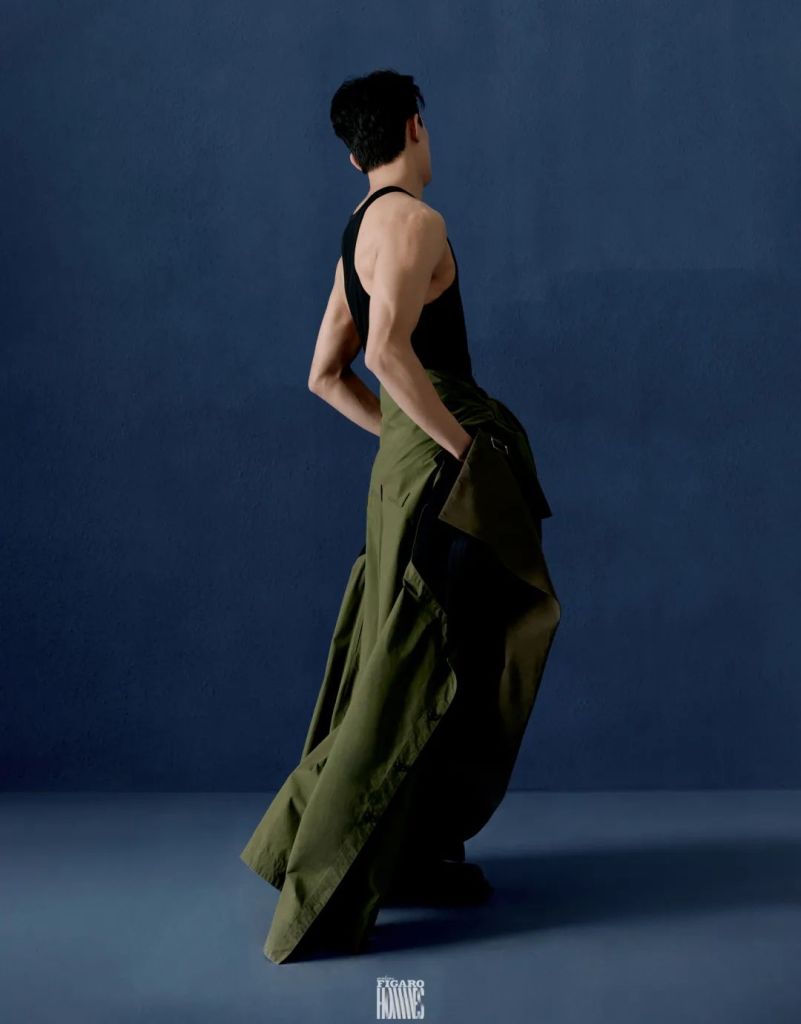
In another cycling Vlog, Wu Lei once shouted “ground-based flight” excitedly while enjoying the thrill of riding the wind. This sentence that he wrote when he was twenty years old now runs through his current life. Flying with dreams is not only a process of carrying a heavy load, but also a journey of slowly harvesting the happiness that comes from the realization of dreams. “When you rest, it is like landing.” When you reach the ground, you will stop and take a rest,” he said, “and then continue flying on the road of life at an ideal and constant speed.”
So, where is the destination?
“There is no destination. When you reach the destination, you will die…” He couldn’t help laughing, but he said seriously, “I think people’s dreams and ideals actually don’t know where the final destination will be. Wherever it goes, I think, we can only go ahead and cherish it.”
The route of life is not always smooth sailing. There are always headwinds and occasionally encounter turbulence, so there will be constant bumps and ups and downs. However, no matter what the weather is like today, he has been willing to continue flying.
Source: Madame Figaro
 Wu Lei Galaxy